Do not tamp too hard!
To extract espresso, you place the ground coffee in a portafilter, flatten it with a distributor, and then tamp it with a tamper.
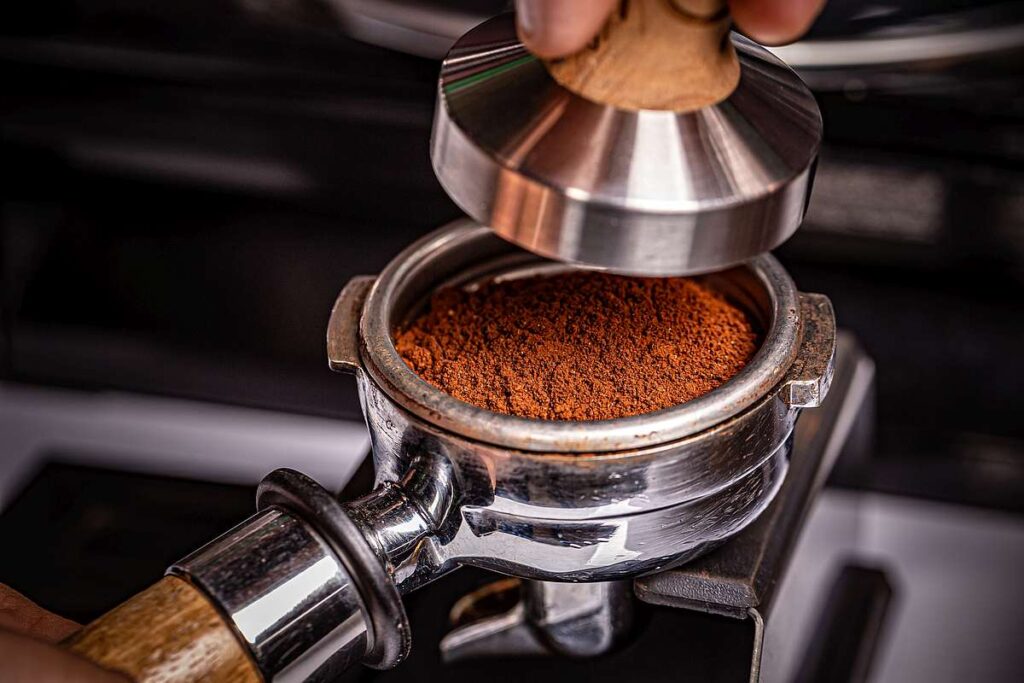
This increases the density of the coffee grounds in the portafilter, increasing the pressure of the hot water on the grounds.
Failure to do so increases the likelihood of under-extraction, meaning the coffee’s natural components aren’t fully extracted.
You might think that tamping too hard is always the best option, but doing so increases the density of the grounds too much.
If the density is too high, the hot water won’t penetrate evenly into the coffee and will first penetrate the weakest part of the filter basket, the edges.
This causes water to primarily pass through the gaps around the grounds, preventing it from penetrating the center.
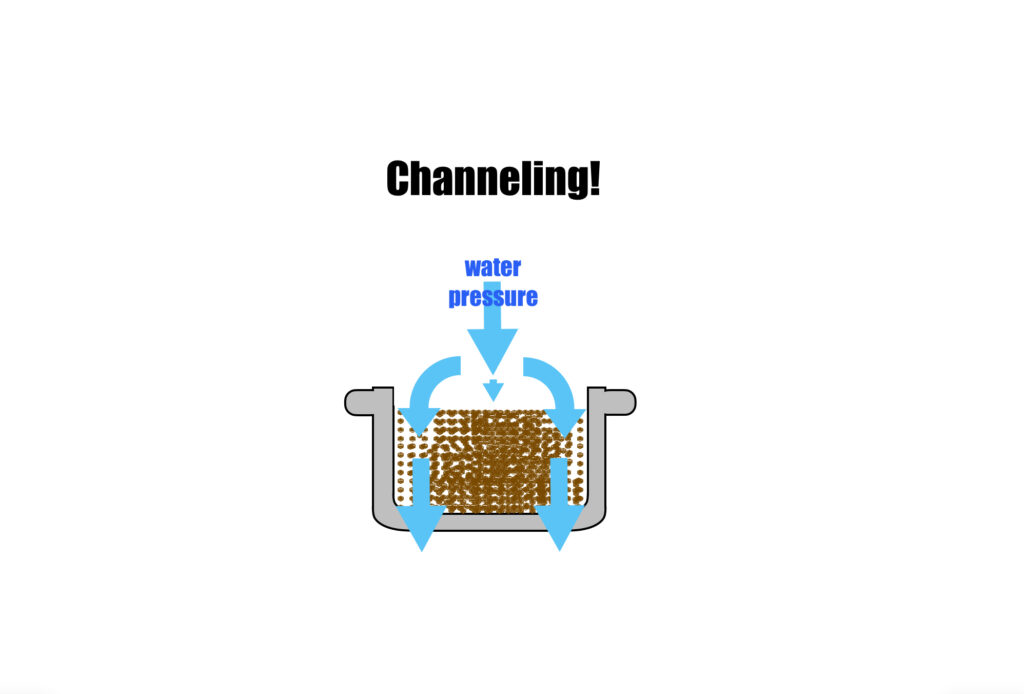
This is considered channeling, but channeling significantly reduces the flavor of the coffee.
This is because extraction occurs quickly in areas where water penetrates first, while extraction stops in areas where water cannot penetrate.
To achieve a good coffee flavor, the coffee grounds must be evenly saturated with hot water.
This ensures that all the coffee components are extracted simultaneously and evenly.
This is precisely why a uniform coffee grind enhances the flavor of the coffee.
The same reason we distribute the coffee and use a tamping stick to break up clumps in the coffee grounds.
Tamping means pressing gently, not with all your might.
Tamping too hard not only causes channeling but also strains your wrists, so it’s completely unnecessary.
Even with distribution, the coffee extraction is reasonably good.
It’s not that the tamping is weak, preventing the 9 bar pressure from reaching the desired level.
In such cases, it’s better to adjust the grind size and bean dosage.
Now, remember this:
“Tampering is just a little help.”

Comments (0)