Pros and Cons of Flat Burrs and Conical Burrs, and the Differences in Coffee Flavor…
The basic principles of extracting delicious coffee.
These days, more and more people are drinking filter coffee at home, and it seems like the number of people using semi-automatic coffee machines is also increasing.
I think this is partly due to the growing demand for more delicious coffee.
We watch a lot of YouTube videos to try out different methods to make delicious coffee, but we often get confused about what’s truly good and what’s not, with recommendations like “this is good, that is good, this should work, this shouldn’t work.”
However, if you have a solid understanding of the principles of brewing delicious coffee, you can easily find the right methods and tools without much fuss.
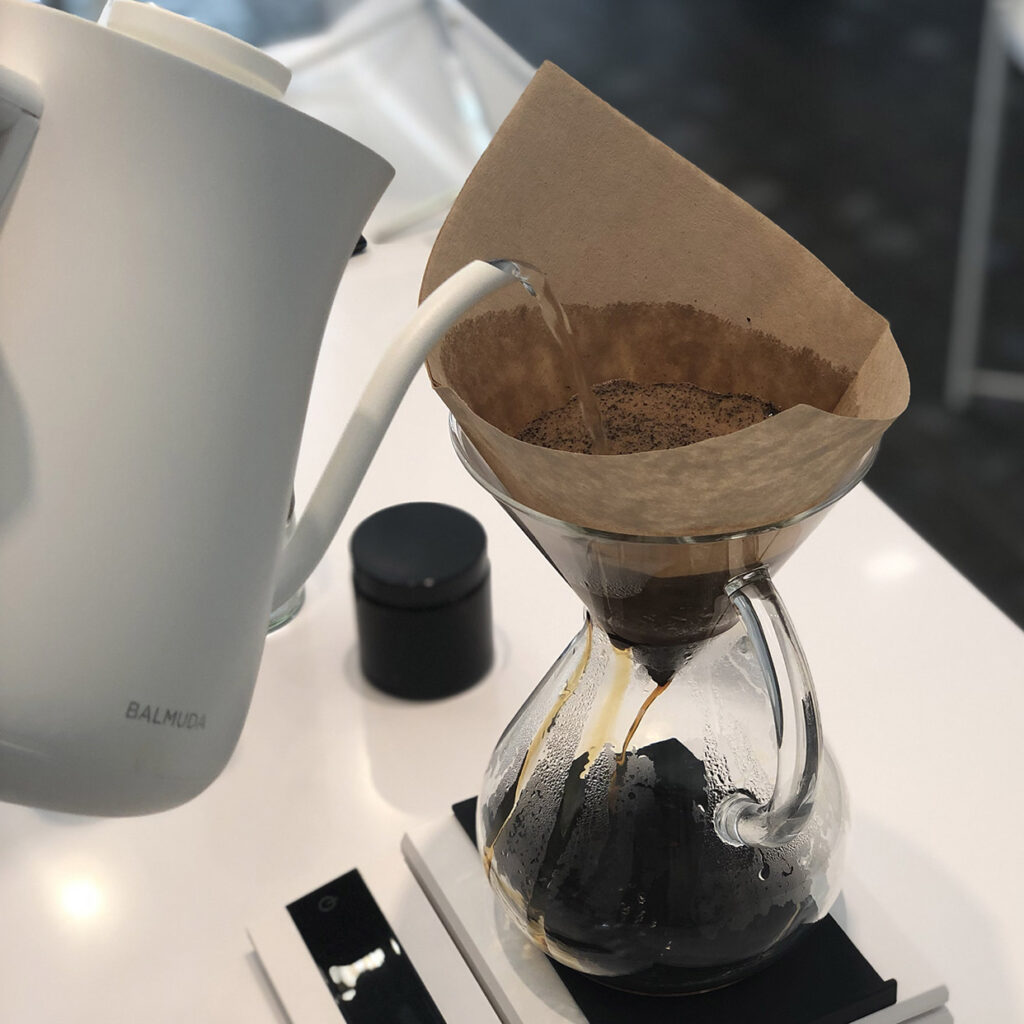
The first principle lies in the coffee beans.
It’s so obvious that it’s easy to overlook it.
If the raw ingredients aren’t good, no matter what you do, it’ll be bland.
Conversely, if the raw ingredients are excellent, even if the brewing is a bit clumsy, you can expect an above-average taste.
Specialty coffee is free of unpleasant odors or off-flavors.If you’re unsure which specialty coffee beans to choose from among the countless options, just ask the person.
The coffee industry is a human-run business, so buying from a place run by good people increases your chances of getting quality beans.

The second principle is uniformity.
When coffee grounds come into contact with water, the various components of the coffee dissolve in the water, a process called coffee extraction.
The most important principle for brewing delicious coffee lies in uniformity.
Grinding the coffee beans into uniformly sized particles and evenly moistening the coffee grounds is the most crucial principle for brewing delicious coffee.
This is why a grinder that grinds evenly is essential.

Let’s say some particles are ground too finely, while others are too coarse and coarse.
When hot water is poured, the smaller particles will extract quickly, while the larger particles will extract slowly.
If the small particles block the water path, the likelihood of channeling toward the larger particles increases.
This results in rapid, strong extraction in some areas, while the extraction is halted in others.
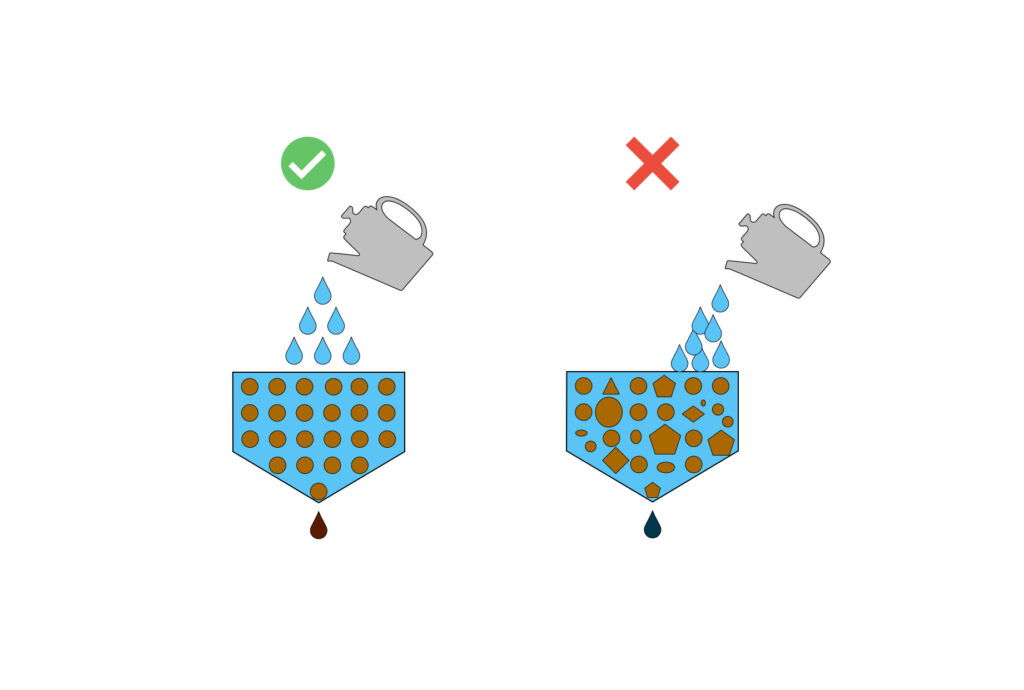
This is because the portions that extracted quickly may develop unpleasant flavors over time, while the other portions may not extract at all.
This principle applies equally to filter coffee and espresso extraction.
It’s safe to say that many coffee tools and accessories exist specifically for this purpose.
The third principle is ‘time.’
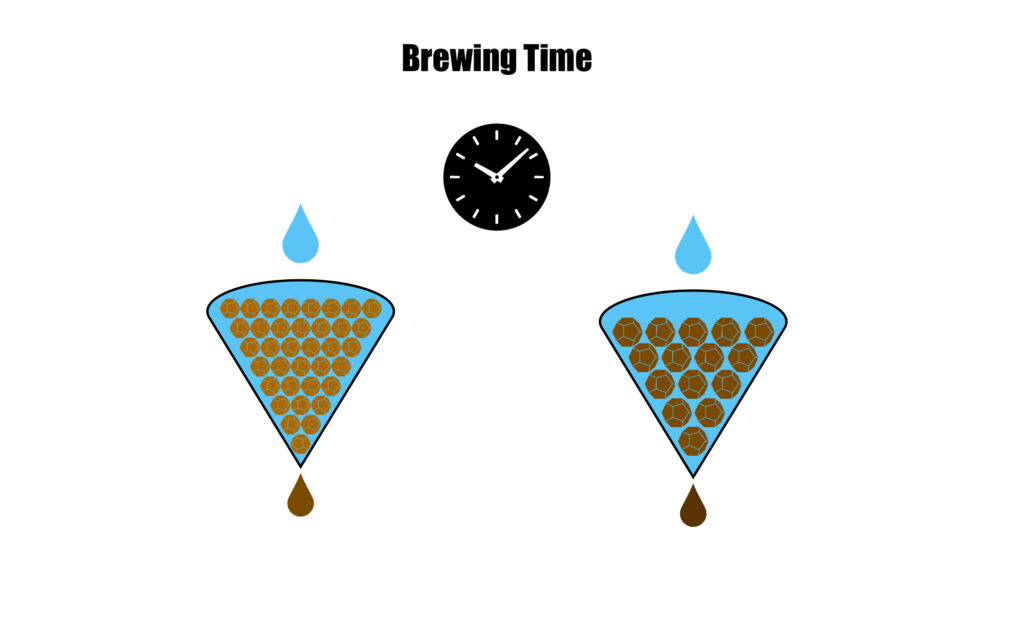
The various components of coffee are extracted together depending on the length of contact time with water.
If the contact time is too short, the coffee’s pleasant flavors won’t fully emerge, while if the contact time is too long, bitterness and undesirable flavors will be extracted, diminishing the coffee’s taste.
Coffee is an emulsion of soluble and insoluble components mixed in water.

The concentration of this emulsion determines the flavor of the coffee.
Coffee makers must determine how many grams of coffee grounds to use, how many grams of water to leave in contact for a certain amount of time, and how strong the brew should be.
This is where various recipes arise, and each person’s approach will vary slightly.
There is no one absolute way to make a coffee recipe, so experiment with different recipes to find the one that works best for you.

Comments (0)